Key Takeaway
A practical guide to properly reconstituting lyophilised peptide powders with bacteriostatic water for research use. Covers equipment, technique, storage, and common mistakes.
Why Reconstitution Technique Matters
Reconstitution — dissolving a lyophilised (freeze-dried) peptide powder into a liquid form suitable for research use — is one of the most technically consequential steps in any peptide experiment. Errors at this stage, particularly improper technique or incorrect solvent choice, can degrade compound integrity before an experiment even begins, introducing variables that are difficult to identify or control for afterwards.
This guide covers the complete reconstitution process for research peptides, including equipment selection, technique, concentration calculations, storage, and the most common errors that compromise results.
Equipment Checklist
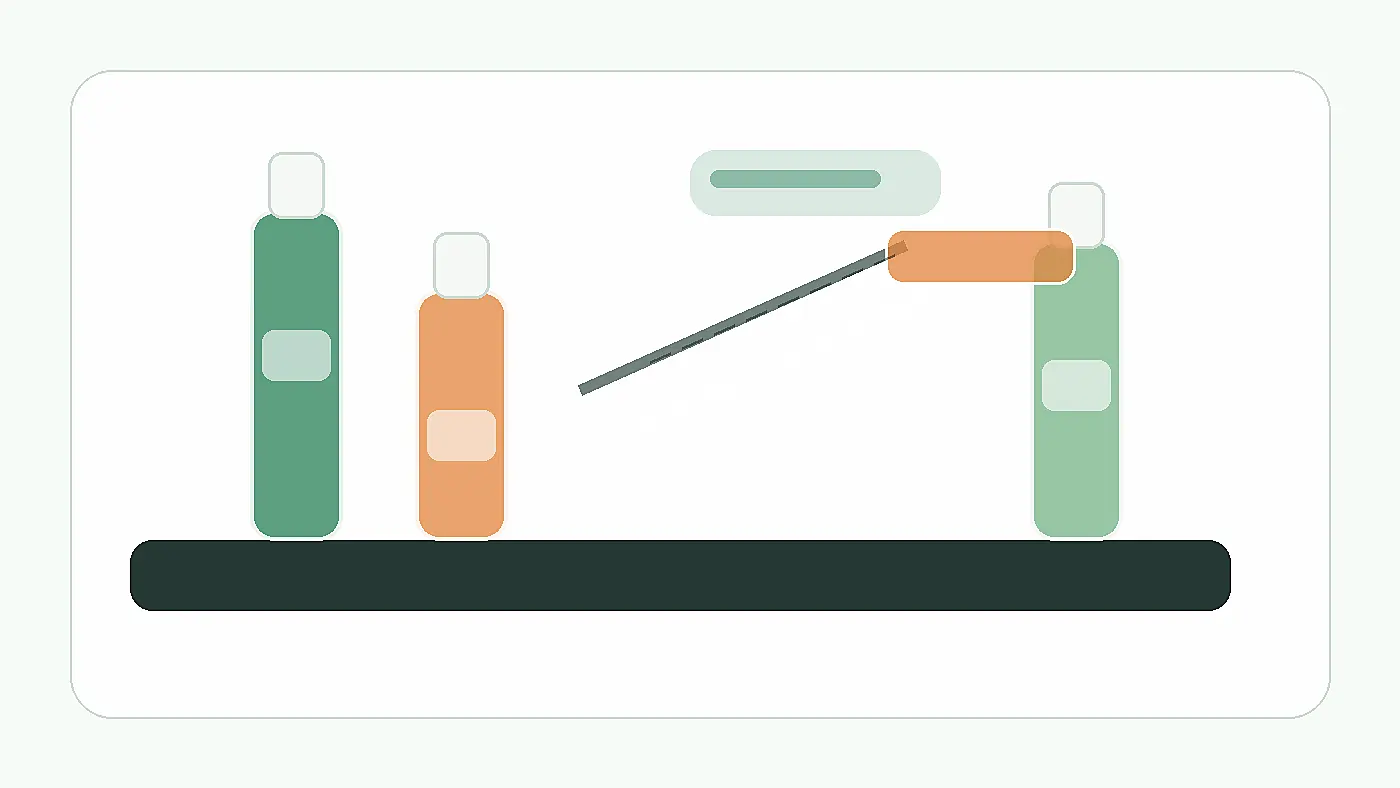
Before beginning reconstitution, confirm you have the following available in your research environment:
- Lyophilised peptide vial: The sealed vial containing the freeze-dried peptide powder. Check the label confirms the batch number matches your COA documentation.
- Bacteriostatic water (BAC water): Sterile water containing 0.9% benzyl alcohol as a preservative. BAC water is the standard diluent for multi-dose research protocols because the benzyl alcohol inhibits microbial growth and extends stability of the reconstituted solution to approximately 28 days.
- Sterile saline or PBS (alternatives): For single-use aliquots or cell culture work where benzyl alcohol is a confound, sterile 0.9% sodium chloride solution or phosphate-buffered saline (PBS, pH 7.4) can be used. Solutions reconstituted without a preservative should be used within 24 hours.
- Insulin syringes (research grade): Typically 1 mL syringes with 27–31G needles. Use individually packaged sterile syringes for each reconstitution event.
- Alcohol swabs: 70% isopropyl alcohol wipes for sterilising the rubber septa of both vials before penetration.
- Gloves and appropriate PPE: Maintain a clean work environment consistent with your laboratory's standard operating procedures.
Step 1: Preparation and Temperature Equilibration
Remove the peptide vial and BAC water from cold storage and allow both to equilibrate to room temperature before opening. This typically takes 10–15 minutes. Temperature equilibration reduces the risk of condensation forming inside the vial and ensures consistent dissolution behaviour. Cold solvent added to a cold vial can also slow dissolution and make it harder to confirm complete reconstitution visually.
While waiting, clean your work surface and prepare your equipment. Use an alcohol swab to wipe the rubber septa of both the peptide vial and the BAC water vial, then allow them to air-dry for at least 30 seconds before penetrating with a needle. Wet alcohol can carry into the vial on the needle tip.
Step 2: Calculate Your Target Concentration
Before drawing solvent, calculate how much BAC water to add to achieve your target research concentration. The formula is:
Volume of diluent (mL) = Peptide mass (mg) ÷ Target concentration (mg/mL)
For example, if your vial contains 5 mg of peptide and you want a concentration of 5 mg/mL, add 1 mL of BAC water. If you want 2.5 mg/mL, add 2 mL. Document this calculation and the resulting concentration clearly in your research notes. Common working concentrations vary by compound and protocol — consult published literature for the specific compound being researched.
Step 3: Drawing the Solvent
Using a sterile insulin syringe, draw slightly more BAC water than your calculated volume, then carefully expel any air bubbles and adjust to the precise volume needed. Hold the BAC water vial inverted and draw from the bottom of the liquid rather than from air. Minimise the number of needle penetrations through the BAC water vial septum to maintain sterility of the water supply.
Step 4: Adding Solvent to the Peptide Vial — Critical Technique
This step is the most technically important in the entire process. Insert the syringe needle through the rubber septum of the peptide vial at an angle so the tip points toward the glass wall of the vial — not toward the lyophilised powder cake at the bottom.
Inject the BAC water slowly, drop by drop, down the inside glass wall of the vial. The goal is for the liquid to trickle slowly down the wall and pool gently beneath the powder, gradually dissolving it from the bottom up. Do not inject the stream directly onto the lyophilised powder. Direct force, even from a small liquid stream, can physically disrupt the delicate porous structure of freeze-dried peptide, potentially affecting dissolution behaviour and, in some cases, peptide structure.
Step 5: Dissolving the Peptide — Swirl, Never Shake
Once all the solvent has been added, gently swirl the vial in small horizontal circles. The lyophilised powder should begin dissolving within 30 seconds to 2 minutes under gentle swirling. The solution should become clear (or slightly opalescent for some peptides) without visible undissolved particles.
If particles remain after 2 minutes of gentle swirling, allow the vial to sit at room temperature for an additional 5 minutes, then swirl again. Most research-grade peptides dissolve completely under these conditions. If dissolution is incomplete after 10 minutes, do not proceed — contact your supplier, as this may indicate a quality issue with the lyophilisation or powder integrity.
Do not shake the vial. Vigorous mechanical agitation introduces shear forces and air-liquid interface disruption that can cause peptide aggregation and, in some cases, irreversible structural changes (denaturation). This is one of the most commonly made reconstitution errors and one of the least recoverable.
Step 6: Inspection and Documentation
After dissolution, hold the vial against a light source and inspect the solution carefully. It should be clear or slightly translucent with no particulate matter, cloudiness, or unusual colour. Document the date and time of reconstitution, the volume of BAC water added, the resulting concentration, and the appearance of the solution. This documentation is part of good laboratory practice and ensures traceability for your research records.
Step 7: Storage of Reconstituted Peptide
Store reconstituted peptide at 2–8°C (standard refrigerator temperature) immediately after reconstitution. Do not leave the vial at room temperature for extended periods. Properly stored reconstituted peptides in bacteriostatic water are stable for approximately 28 days. After this period, the risk of degradation from hydrolysis and microbial contamination increases meaningfully.
For experiments requiring small aliquots used over an extended research period, consider aliquoting the reconstituted solution into multiple single-use volumes immediately after reconstitution and storing aliquots at −20°C. Individual aliquots can be thawed once, used completely, and the empty vial discarded. This avoids repeated freeze-thaw cycles on the main vial, each of which can contribute to peptide degradation.
Concentration Calculations: A Practical Reference
Understanding how to convert between the units commonly used in peptide research (mg, μg, mg/mL, μg/mL) is essential for consistent protocol execution:
- 1 mg = 1,000 μg
- 1 mg/mL = 1,000 μg/mL = 1 mg per 1 mL of solution
- If you add 2 mL to a 5 mg vial, concentration = 5 mg ÷ 2 mL = 2.5 mg/mL = 2,500 μg/mL
When designing research protocols, work backwards from your required experimental concentration to determine the total volume you need and the appropriate reconstitution ratio. Consistency in this calculation prevents concentration errors that can make results non-reproducible between experimental sessions.
Common Reconstitution Mistakes
- Injecting solvent directly onto the powder: Disrupts the freeze-dried cake and can affect dissolution. Always aim at the glass wall.
- Shaking rather than swirling: Introduces shear forces that can cause aggregation. Gentle swirling is sufficient for all standard research peptides.
- Using non-bacteriostatic water for multi-use vials: Plain sterile water has no preservative and supports microbial growth. Use BAC water for any vial that will be accessed multiple times over multiple days.
- Inadequate temperature equilibration: Cold vials dissolve peptides more slowly and are more susceptible to condensation issues.
- Skipping visual inspection: A final inspection step catches incomplete dissolution and potential contamination before it enters your experiment.
- Not documenting reconstitution: Missing records of date, concentration, and volume make it impossible to trace results back to specific preparation batches later.
Frequently Asked Questions
Can I use sterile water instead of bacteriostatic water?
Yes, but only for single-use preparations. Sterile water (without benzyl alcohol) provides no microbial inhibition, meaning a reconstituted solution should be used within 24 hours of preparation and the remainder discarded. For any multi-day research protocol where the vial will be accessed repeatedly, bacteriostatic water is strongly recommended.
What if my peptide won't dissolve completely?
Allow additional time (up to 15 minutes of gentle swirling at room temperature). If dissolution is still incomplete, a small amount of additional BAC water can sometimes help — though this will change your concentration and must be documented. Persistent insolubility can indicate lyophilisation quality issues or incorrect storage conditions. Contact your supplier with the batch number and COA documentation.
How do I store lyophilised peptide before reconstitution?
Keep sealed lyophilised peptide vials at −20°C, away from light and moisture. Brief room-temperature exposure during transit does not typically compromise integrity, but extended warm storage accelerates degradation. Once the vial seal is broken or the vial is reconstituted, follow the reconstituted storage guidance above.
Can I add DMSO if a peptide doesn't dissolve in water?
Some hydrophobic peptides do require a co-solvent. If a peptide is expected to require DMSO based on its published literature, a small amount (typically 1–5% v/v of DMSO added before the aqueous diluent) can improve solubility. However, the vast majority of research peptides — including BPC-157, GLP-1 analogues, TB-500, and most recovery/performance peptides — are water soluble and dissolve readily in BAC water without co-solvents. DMSO should only be used when the literature specifies it, as it can affect cell viability in culture and has its own pharmacological activity.
How long is a reconstituted peptide stable?
In bacteriostatic water stored at 2–8°C, most research peptides are stable for approximately 28 days. Stability depends on the specific compound: some peptides with disulfide bonds or other reactive chemistry may have shorter stability windows. Aliquots frozen at −20°C immediately after reconstitution can extend this to 2–3 months, though each freeze-thaw cycle should be minimised. Always consult the compound-specific documentation and storage guidance from your supplier.
Quality First
Verify purity before you research
EvoPeak provides batch-level HPLC/MS analysis, identity verification, and endotoxin screening for every compound.
Research & Educational Disclaimer: This article is for informational and educational purposes only. It references published scientific literature and does not constitute medical advice, diagnosis, or treatment recommendations. FOR LABORATORY RESEARCH USE ONLY. Not for human consumption, injection, or therapeutic use. All products are sold strictly as research chemicals. By purchasing, you confirm you are 18+ and agree to use products solely for legitimate research purposes.